INITIAL STATE
All celestial bodies begin comparatively small and stationary near the centre. Moons remain associated with their respective planets.
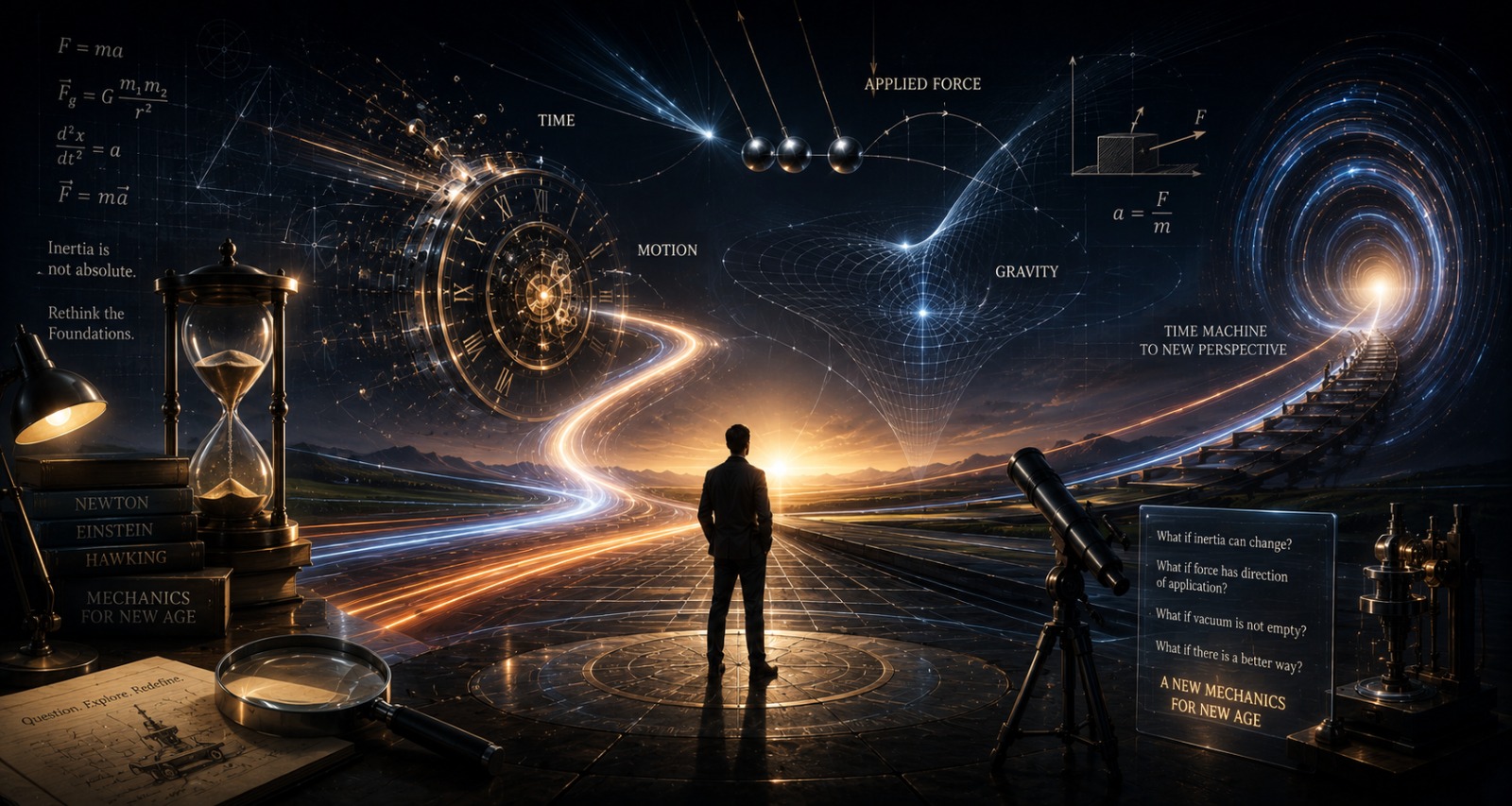
Redefining the Foundations of Mechanics & Cosmology
Every breakthrough begins with the courage to question.
Join a journey that explores new perspectives and inspires scientific discovery.
“Every great scientific revolution begins with a single question.”

Mechanics for New Age is a global scientific knowledge platform dedicated to exploring new ideas, encouraging critical thinking, and fostering meaningful scientific discussion and collaboration. The platform brings together books, research, articles, lectures, discussions, and media in a unified environment. New content and features are being added progressively. Visitors are warmly invited to explore M4NA, follow its development, and join its growing scientific community. Thank you for your patience and support as Mechanics for New Age advances its vision of scientific discovery.

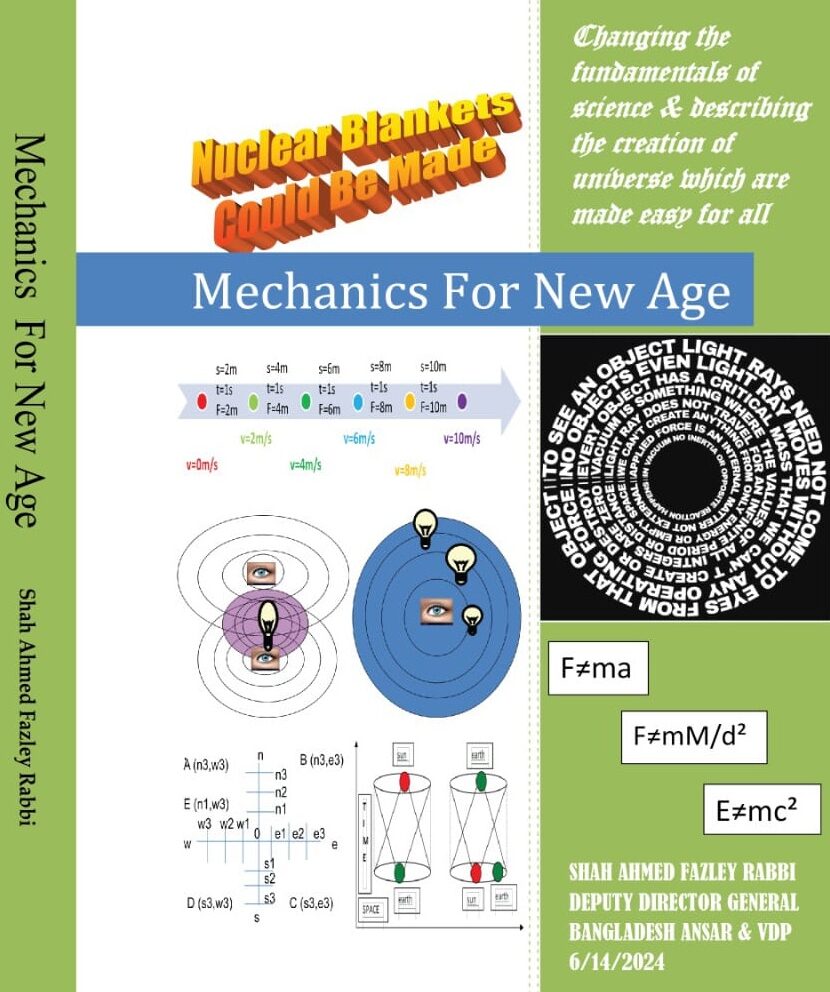
It is my pleasure to welcome you to Mechanics for New Age, a platform dedicated to scientific inquiry, logical reasoning, and respectful intellectual discussion. My years of research, observation, and critical analysis of fundamental concepts in mechanics and related scientific theories culminated in my book *Mechanics for New Age*, presenting a new framework intended to stimulate thoughtful examination of established ideas. This platform brings together students, researchers, educators, professionals, and curious minds to explore ideas, exchange perspectives, and engage in meaningful scientific dialogue. Whether you agree or disagree with the views presented here, your thoughtful participation is valued. I warmly invite you to explore the resources, join the discussions, and follow the continuing development of this platform. Thank you for being part of this journey.

THREE DOMAINS OF M4NA INVESTIGATION
CLASSICAL MECHANICS
Newton
QUANTUM & RELATIVITY
Einstein
COSMOLOGY & UNIVERSE
Stephen Hawking

(Operating/Motion Cause)

(Motion Value/Motion State)

(Force Quantity/Motion Quantity)


Constant Pattern (4,4,4,4)

Increasing Pattern (2,4,6,8)

Decreasing Pattern (8,6,4,2)

Changing Pattern (2,4,4,2)
Competing Effects
(4-2=2)

Accelerative & Average (2,4,6 & 4)
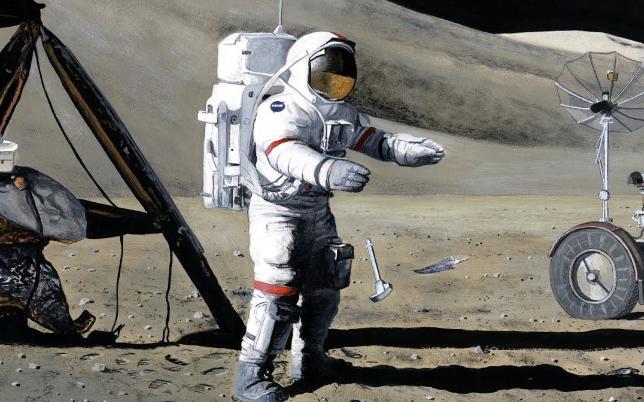
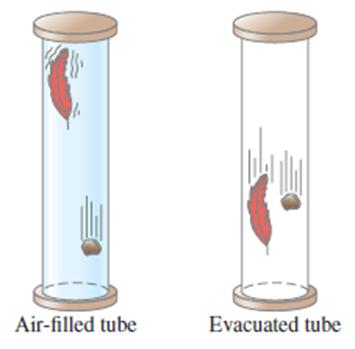

Under the same gravitational conditions, bodies of different masses can travel the same distance during the same successive time intervals/motion as well as in total operation/motion. In a pattern say 2,4,6 objects with different masses travel 2m,4m,6m in vacuum.Here 3 interval forces 2,4,6 constitutes a new force 12. Velocity pattern & travelling distance pattern depends on applied force/resultant force pattern.
GRAVITY IS AN ACCELERATIVE TYPE OF APPLIED/OPERATING FORCE.
OBSERVATION
QUESTION
ANALYSIS
CALCULATION
M4NA FRAMEWORK
From Applied Force to Velocity, Travelling Distance and Force Identity
Observe how the kick initiates the ball's operation and how its velocity pattern determines its travelling distance.
Increase the kick strength to increase the model's velocity values.
Choose how velocity varies across the five successive intervals.
Each bar represents the velocity value for one successive one-second interval.
| Interval | Duration tᵢ | Velocity vᵢ | Travelling Distance sᵢ |
|---|
For every interval, the model calculates the travelling distance, force quantity and corresponding force value.
| Interval | tᵢ (s) | vᵢ (m/s) | sᵢ = vᵢtᵢ (m) | Fᵢ = ksᵢ | fᵢ = Fᵢ/tᵢ |
|---|---|---|---|---|---|
| Total | 0.00 | 0.00 | 0.00 | ||
The total force quantity corresponds to the total travelling distance through the proportionality constant k.
The same relation is evaluated for each individual interval.
For each interval, the force value corresponds to its velocity value under the model.
For the complete operation, the total force quantity divided by the total duration corresponds to the average velocity multiplied by k.
The sequence of interval values is evaluated separately from the totals.
Different interval patterns can have the same total travelling distance and average velocity. Therefore, totals alone do not identify the complete interval pattern.
Compare an object accelerating from rest at 2 m/s² with an object moving uniformly at 4 m/s. Each interval is 1 second.
At 4 seconds, both objects have travelled 16 m, although their interval-by-interval motion patterns differ. This is an illustrative Newtonian comparison.
A side-by-side interactive comparison of conventional optics and the proposed M4NA perspective, showing near and far objects together and illustrating the timing of rays reaching the eye.
Light illuminates the objects. Reflected or scattered light travels from each object to the observer's eye.
A conceptual illustration of the proposed M4NA interpretation, showing outward and return paths associated with both objects.
The near object is closer to the eye than the far object. In this animation, both light signals begin at the same simulated time and travel at the same simulated speed. The near-object signal therefore reaches the eye first, while the far-object signal takes longer.
The animation depicts the proposed M4NA idea by making the near and far ray indicators arrive together. This is an illustration of the proposed model's timing assumption; the animation itself does not demonstrate that the mechanism occurs in nature.
Conventional optics: the simulated travel time
depends on the length of the path when the simulated propagation
speed is fixed.
Proposed M4NA perspective: the right-hand animation
illustrates the proposed simultaneous-arrival concept for both
near and far objects. Its timing is intentionally modelled
differently from the conventional-optics animation.
Use the Highlight Near Object and Highlight Far Object buttons
to identify the corresponding paths. Both objects remain visible
throughout the demonstration.
From Stillness to Motion — A Proposed M4NA Perspective
All celestial bodies begin comparatively small and stationary near the centre. Moons remain associated with their respective planets.
The celestial bodies begin travelling outward at the same radial speed. Their sizes increase as they travel farther from their centres.
The bodies reach their assigned orbital distances. Moons remain associated with their respective planets.
Planets begin circular motion around the Sun. Moons begin circular motion around their respective planets.
The orbital system continues. Switch between the proposed static outside view and the moving inside view.
All celestial bodies begin comparatively small and stationary near the centre. Each moon remains associated with its respective planet.
In this proposed model, celestial bodies begin comparatively small and stationary near the centre.
During the outward phase, bodies travel at the same radial speed. Their sizes increase as they move farther from their respective centres.
Larger bodies travel farther from their respective centres in this proposed model. No specific mathematical size–distance formula is imposed.
After the assigned distances are reached, planets orbit the Sun and moons orbit their respective planets.
The Sun remains at the fixed central position in the model while rotating on its axis.
The outside view represents a static overall arrangement; the inside view shows celestial motion. Both are conceptual representations.
Two Perspectives | Same Reality | Different Understanding
The whole atom is represented as convertible into energy, and an atom can be formed from energy.
Whole-atom conversion is proposed to be incomplete: energy is produced while unconverted residue remains.
Illustrative conceptual model of the two perspectives. The M4NA statements are proposed framework claims; their scientific validity requires supporting derivations and evidence.

Explore thought-provoking articles, new ideas and many more. Read, reflect, and discover knowledge that encourages you to think beyond conventional boundaries.

Your voice matters! Share opinions, raise questions, debate scientific theories, and exchange ideas with fellow learners, researchers, and knowledge enthusiasts.

Meet your intelligent scientific research companion. Ask questions, explore concepts, examine theories, and discover new perspectives through AI-powered intellectual assistance.

Break language barriers and communicate without limits. Translate words, sentences, and ideas across languages to make knowledge accessible to a wider audience.
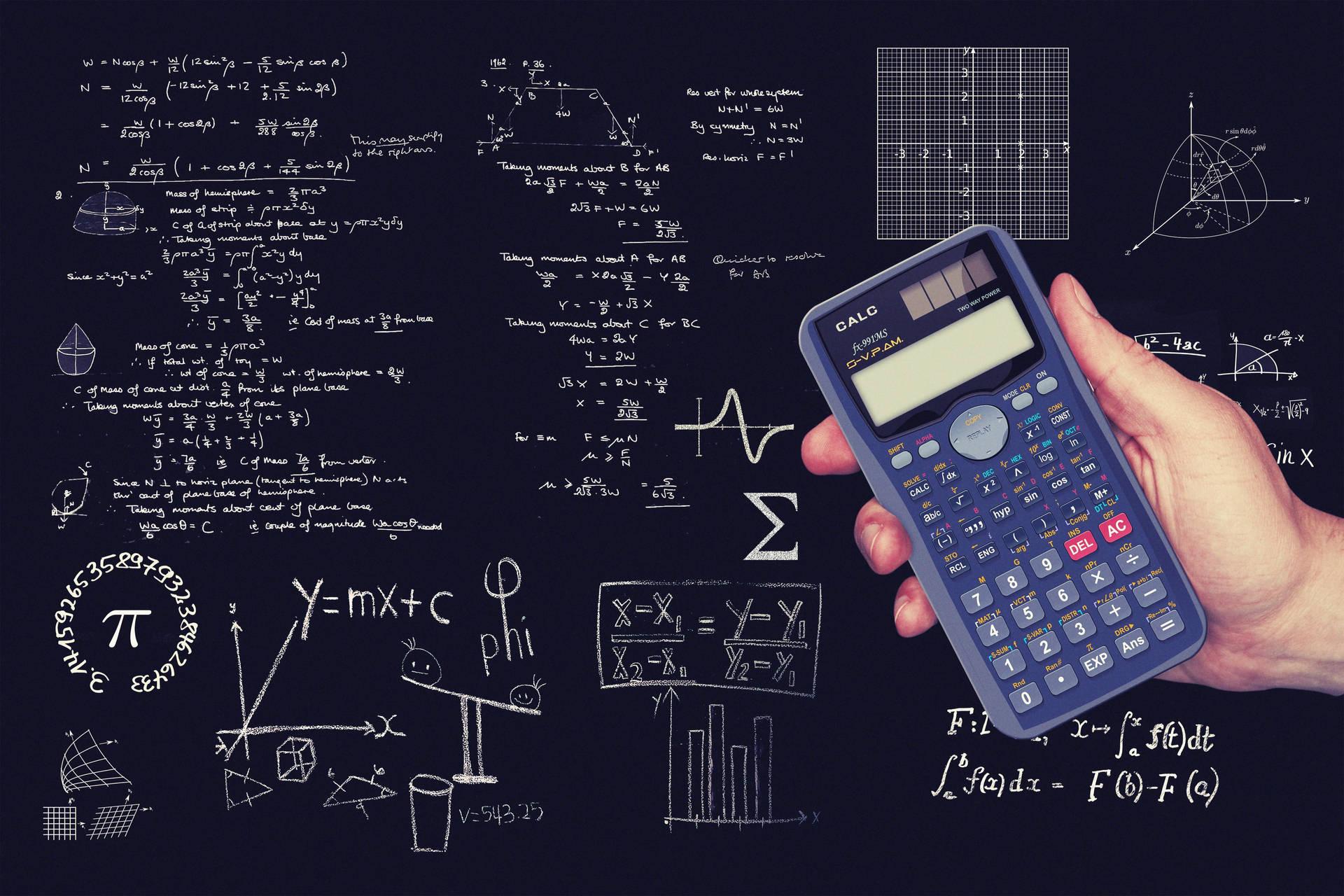
Simplify your calculations and solve mathematical problems with ease. Access useful computational tools for learning, scientific exploration, and everyday applications.

Have a question, suggestion, research idea, or collaboration proposal? Connect with us and become a part of the M4NA knowledge-sharing community.
Click Sign Up menu.
Check email, verify account.
Login with password
View & Manage your profile
Explore, Ask & Share idees.
THE NEXT QUESTION MAY BEGIN HERE.